System Overview
SALLY is a compliance-first route planning platform for US trucking fleets. It generates optimized multi-stop routes that satisfy Hours of Service (HOS) regulations, automatically inserts rest and fuel stops where needed, and continuously monitors active routes to alert dispatchers before problems occur.
The system serves two primary user personas: dispatchers who plan routes and manage fleet operations from a web dashboard, and drivers who receive route guidance and communicate status from a mobile-optimized view.
Context: Where SALLY Fits
SALLY sits at the center of a trucking carrier’s technology ecosystem, pulling data from external systems and delivering route intelligence to dispatchers and drivers.
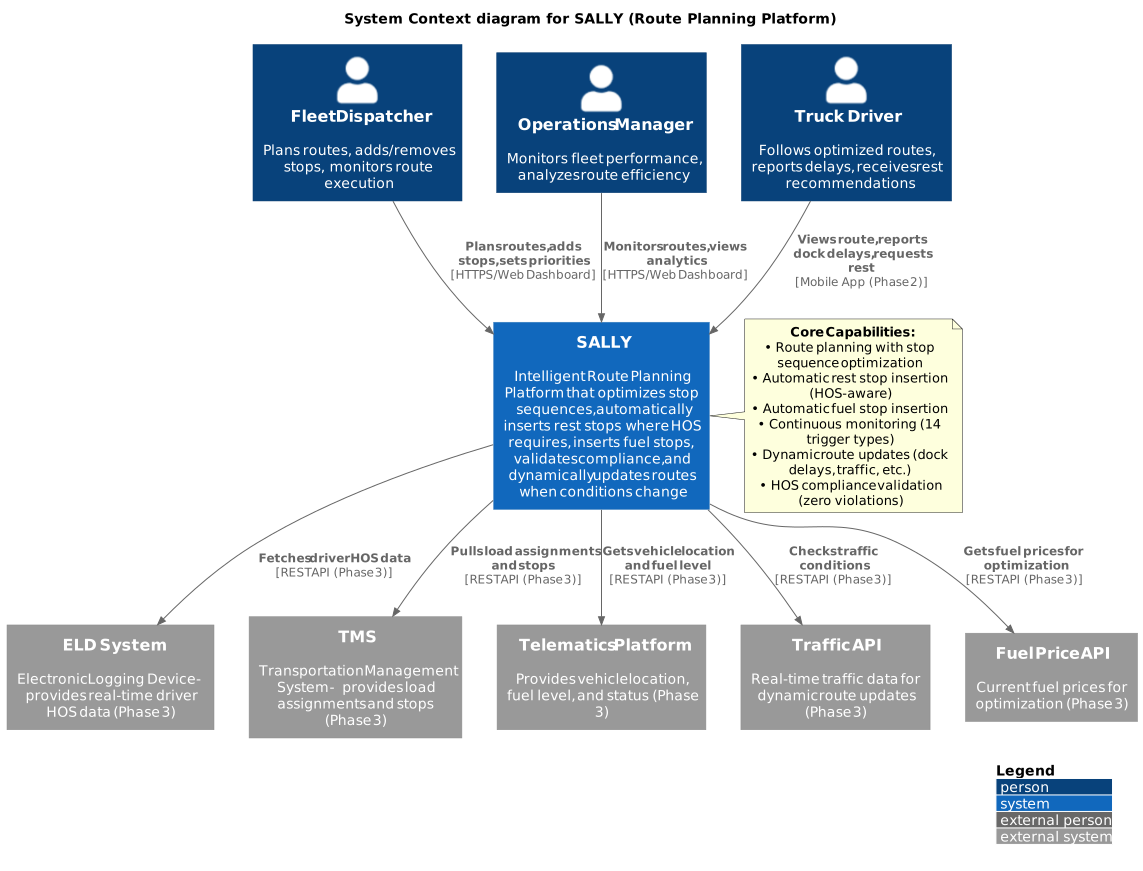
Key integration points:
| External System | What SALLY Reads | Sync Pattern |
|---|---|---|
| TMS (McLeod, project44) | Loads, stops, appointment windows | Scheduled pull via adapter |
| ELD (Samsara, Motive) | HOS clocks, duty status, location | Scheduled pull via adapter |
| Fuel (GasBuddy) | Diesel prices by location | On-demand during route planning |
| Weather (OpenWeather) | Forecasts and severe alerts along route | On-demand during route planning |
| Routing (OSRM / HERE) | Drive distances and durations between stops | On-demand during route planning |
| Firebase Auth | User identity tokens | Per-request token exchange |
Containers: What Gets Deployed
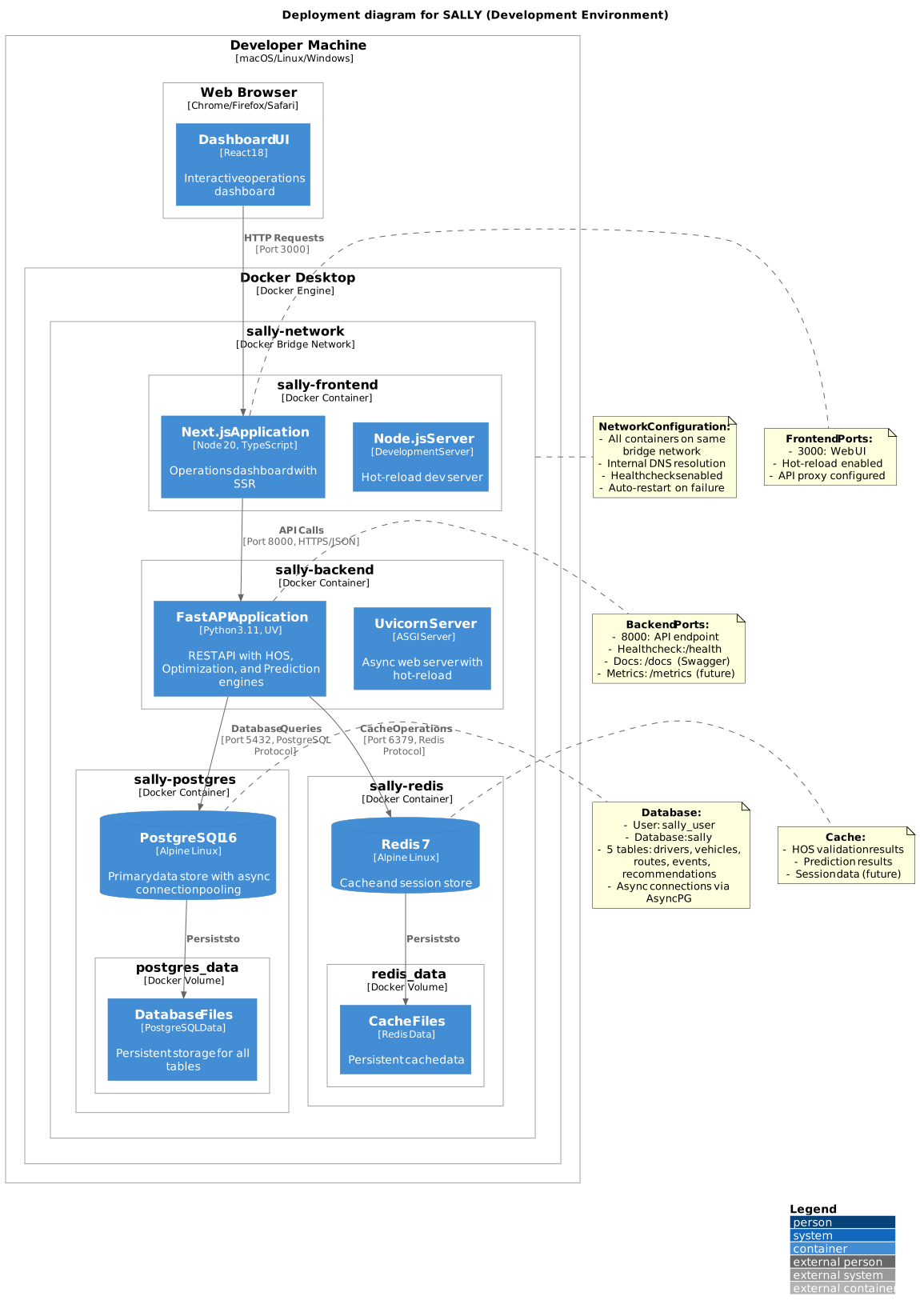
SALLY runs as four containers orchestrated by Docker Compose, plus Firebase Auth as a managed external service.
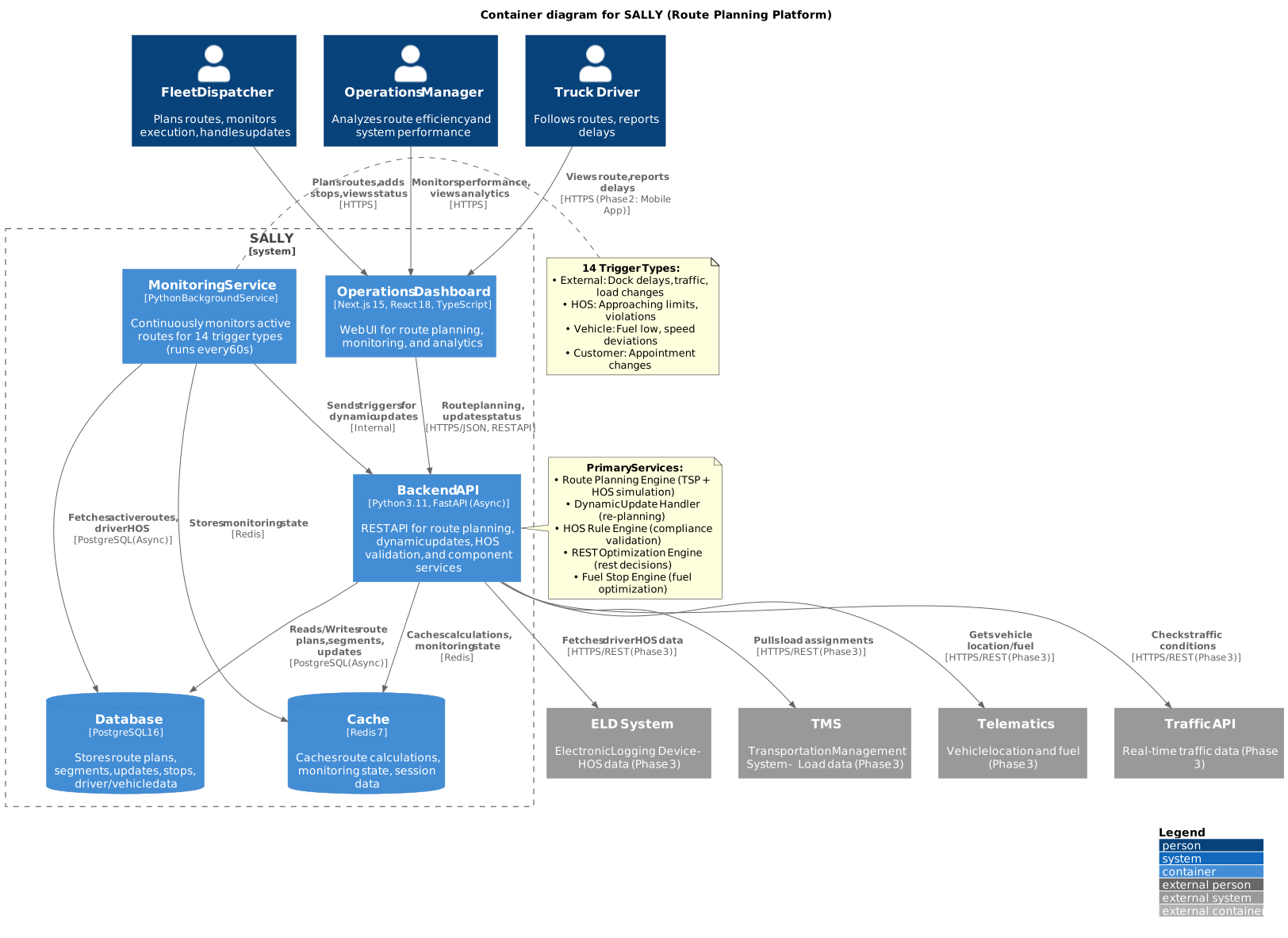
Container Responsibilities
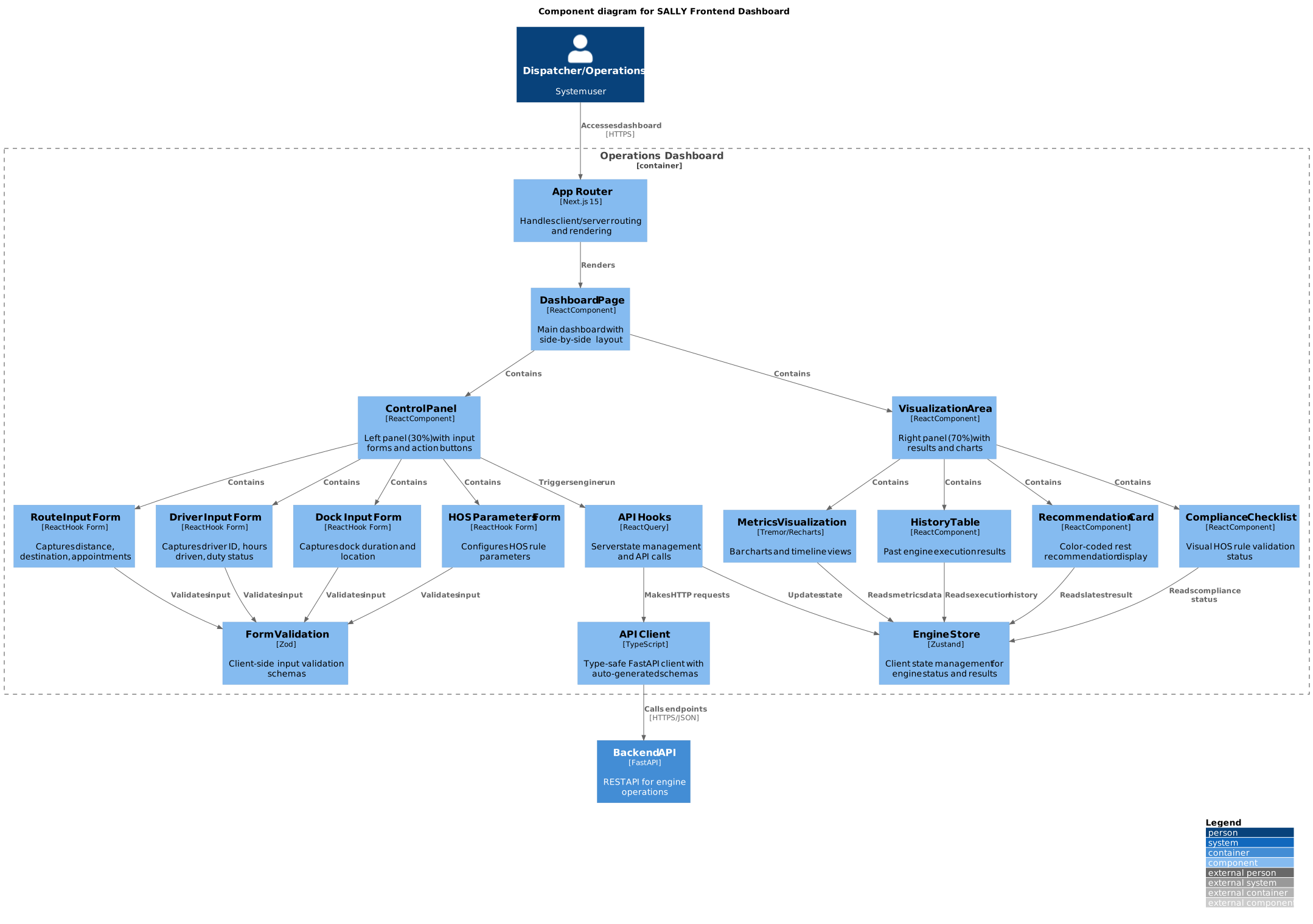
Next.js Frontend (port 3000) handles all user-facing concerns. It uses the App Router with route groups to separate the dispatcher dashboard from the driver view. Zustand manages client-side state (auth, preferences, UI), while React Query handles all server-state synchronization. The frontend authenticates through Firebase, then exchanges the Firebase token with the backend for a JWT stored in an HTTP-only cookie.
NestJS Backend (port 8000) owns all business logic. It exposes a REST API organized into domain modules (Fleet, Operations, Routing, Integrations, Platform), serves real-time events over SSE and WebSocket, and runs background jobs for integration syncing. Every request passes through JWT authentication and tenant isolation guards before reaching a controller.
PostgreSQL 16 (port 5432) is the primary data store, managing 25+ tables across seven functional groups. Prisma ORM handles schema migrations (18 to date) and provides type-safe query building. Every major table includes a tenantId foreign key for row-level multi-tenancy isolation.
Redis 7 (port 6379) serves two purposes: caching frequently accessed data (HOS states, alert counts, integration health) and acting as a pub/sub broker for pushing real-time events to SSE streams.
Three-Layer Architecture
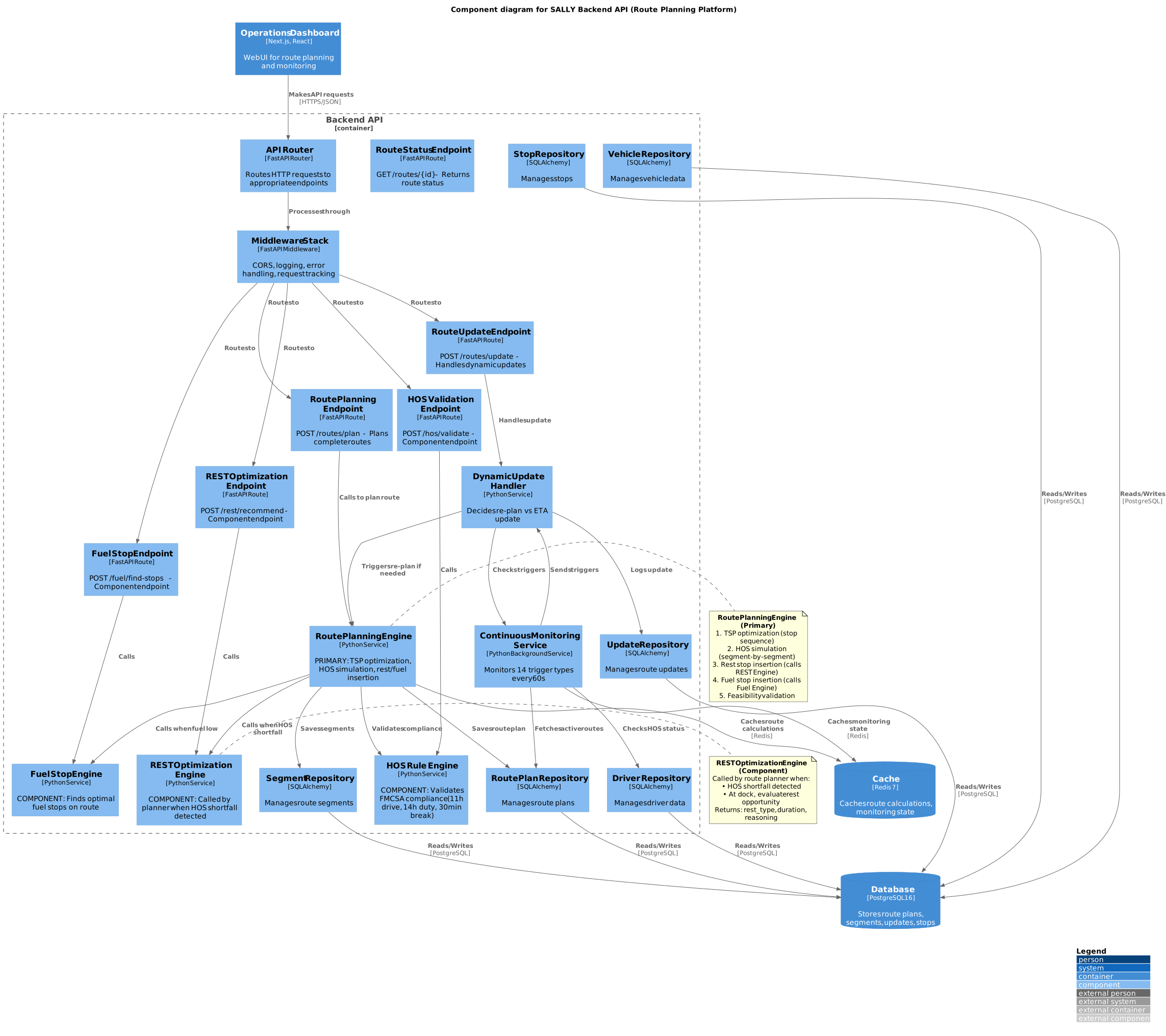
The backend processes fleet operations through three cooperating layers. Each layer has a distinct responsibility and communicates with the others through well-defined service interfaces.
Backend Components
Frontend Components
Layer 1: Route Planning Engine
The route planning engine takes a set of loads with pickup and delivery stops, a driver with current HOS state, and a vehicle with fuel capacity, then produces an optimized, HOS-compliant route plan.
The planning pipeline runs in sequence:
- Stop sequence optimization — Orders the stops to minimize total drive time (TSP solver).
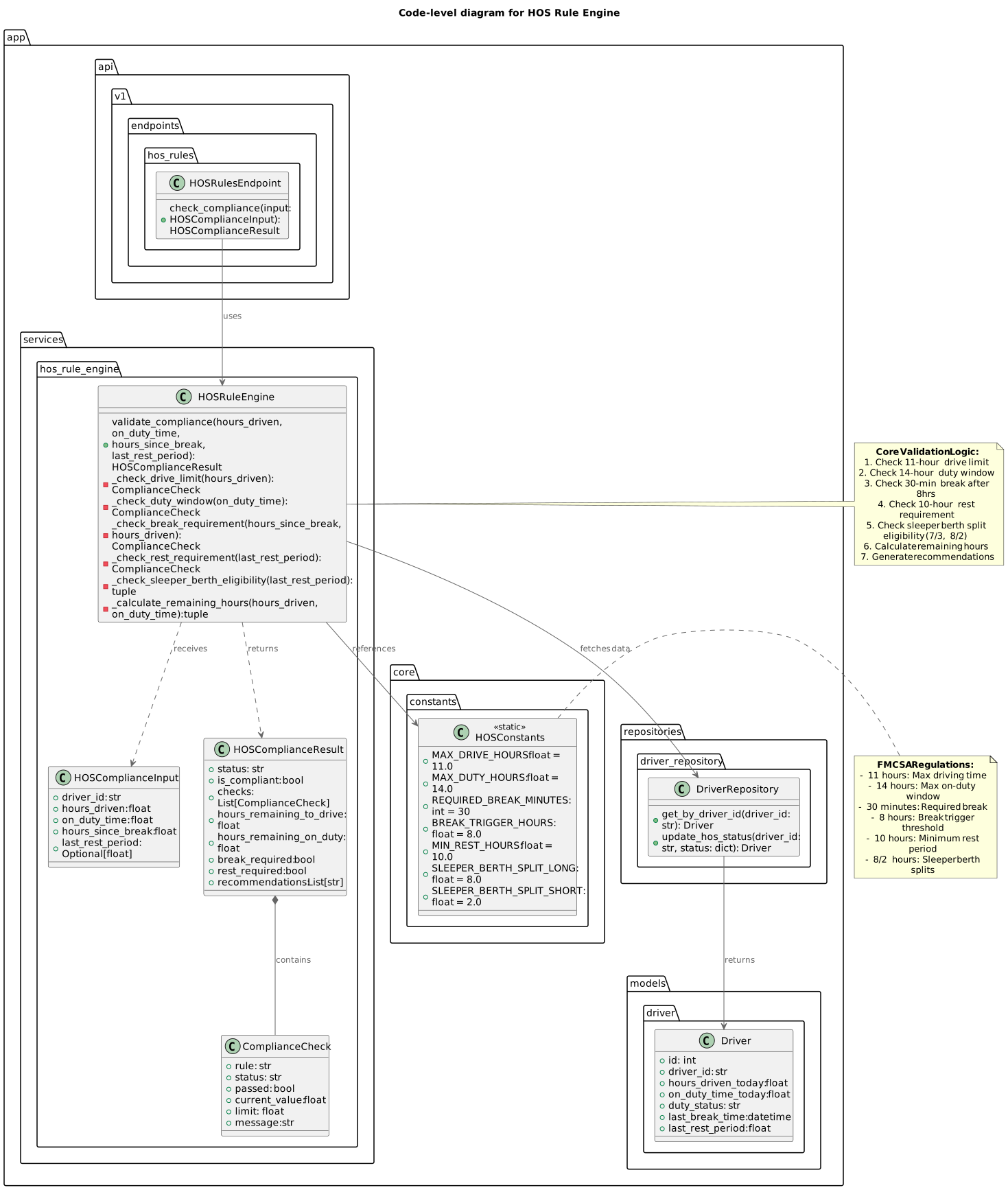
- HOS simulation — Walks each segment of the route, tracking the driver’s 11-hour drive clock, 14-hour on-duty window, 8-hour break requirement, and 70-hour cycle. When the simulation detects that the driver cannot legally complete a segment, it calls the rest stop insertion logic.
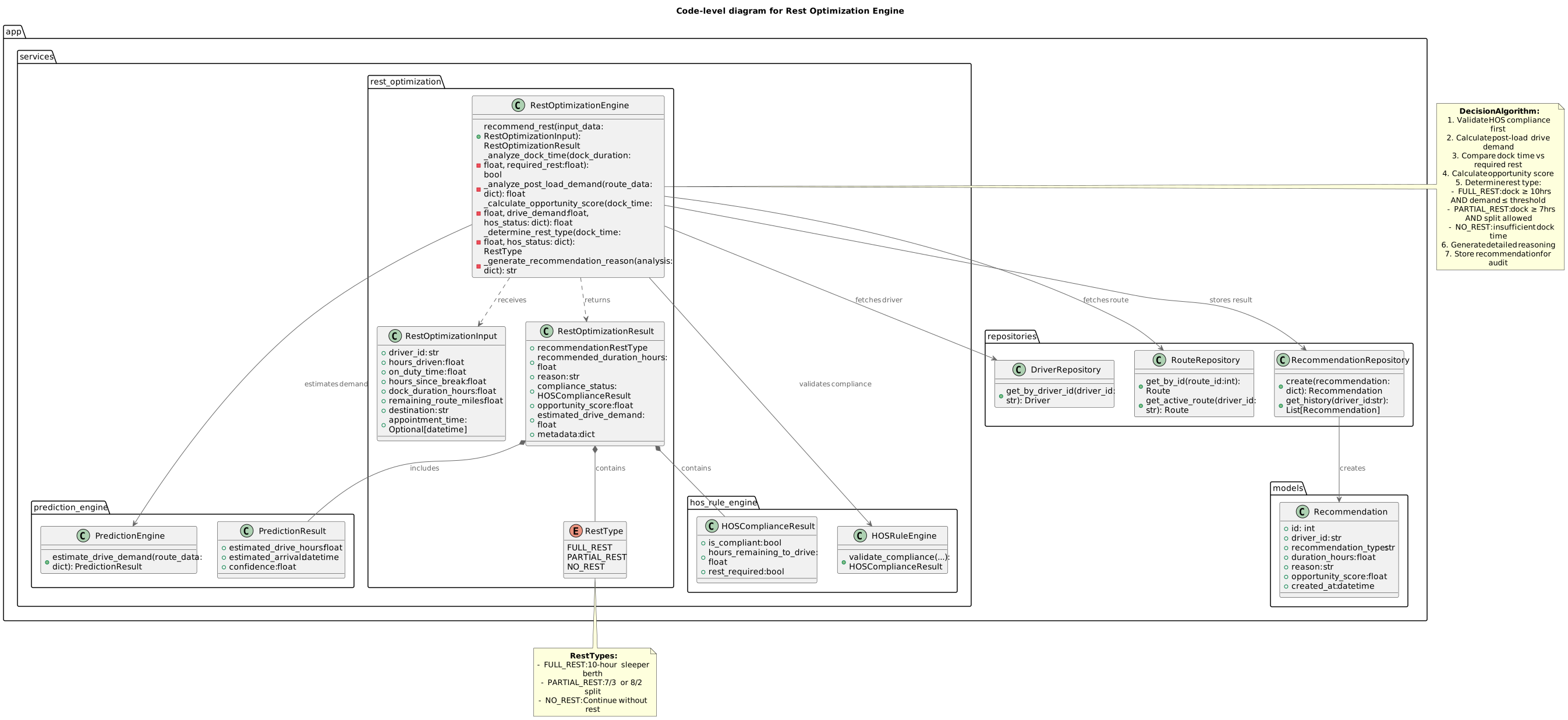
- Rest stop insertion — Determines the appropriate rest type (30-minute break, 10-hour full rest, or docktime conversion) and inserts a rest segment into the route.
- Fuel stop insertion — Monitors the vehicle’s fuel state across segments and inserts fuel stops when the tank would drop below a safe threshold, selecting the cheapest nearby station.
- Feasibility validation — Confirms the complete route is HOS-compliant with zero violations, all appointments are reachable within their windows, and fuel levels remain safe throughout.
Layer 2: Continuous Monitoring
The monitoring layer watches all active routes and generates alerts when conditions change. SALLY defines 20 alert types across six categories:
| Category | Alert Types | Priority Range |
|---|---|---|
| HOS Compliance | Violation, Approaching Limit, Break Required, Cycle Limit, Recap Available, Duty Status Change | Critical to Low |
| Route Progress | Missed Appointment, At Risk, Dock Time Exceeded, Route Delay, Route Completed | Critical to Low |
| Driver Behavior | Not Moving, Speeding, Unauthorized Stop | High to Medium |
| Vehicle State | Fuel Low, Maintenance Due | High to Low |
| External Conditions | Weather Alert, Road Closure | High to Medium |
| System | Integration Failure, System Error | Critical to High |
Alerts follow a lifecycle: Active (generated) -> Acknowledged (dispatcher sees it) -> Resolved (action taken or auto-resolved). The system supports alert grouping (related alerts under a parent), deduplication (same condition does not generate duplicate alerts), escalation (unacknowledged alerts increase in priority), and auto-resolution (alerts resolve automatically when conditions clear).
Layer 3: Dynamic Update Handler
When the monitoring layer detects a trigger, the update handler decides what to do:
- Re-plan — The route is no longer feasible (e.g., HOS violation imminent, road closure). Layer 1 is invoked to generate a new route version.
- ETA update — The route is still feasible but timing has shifted (e.g., dock delay, weather slowdown). Only ETAs are recalculated.
- Notify only — Informational triggers (e.g., route completed, recap hours available) that require no route changes.
Every update is recorded as a RoutePlanUpdate with the trigger type, impact summary, and before/after plan versions.
Code-Level Diagrams
HOS Validation Engine
Optimization Engine
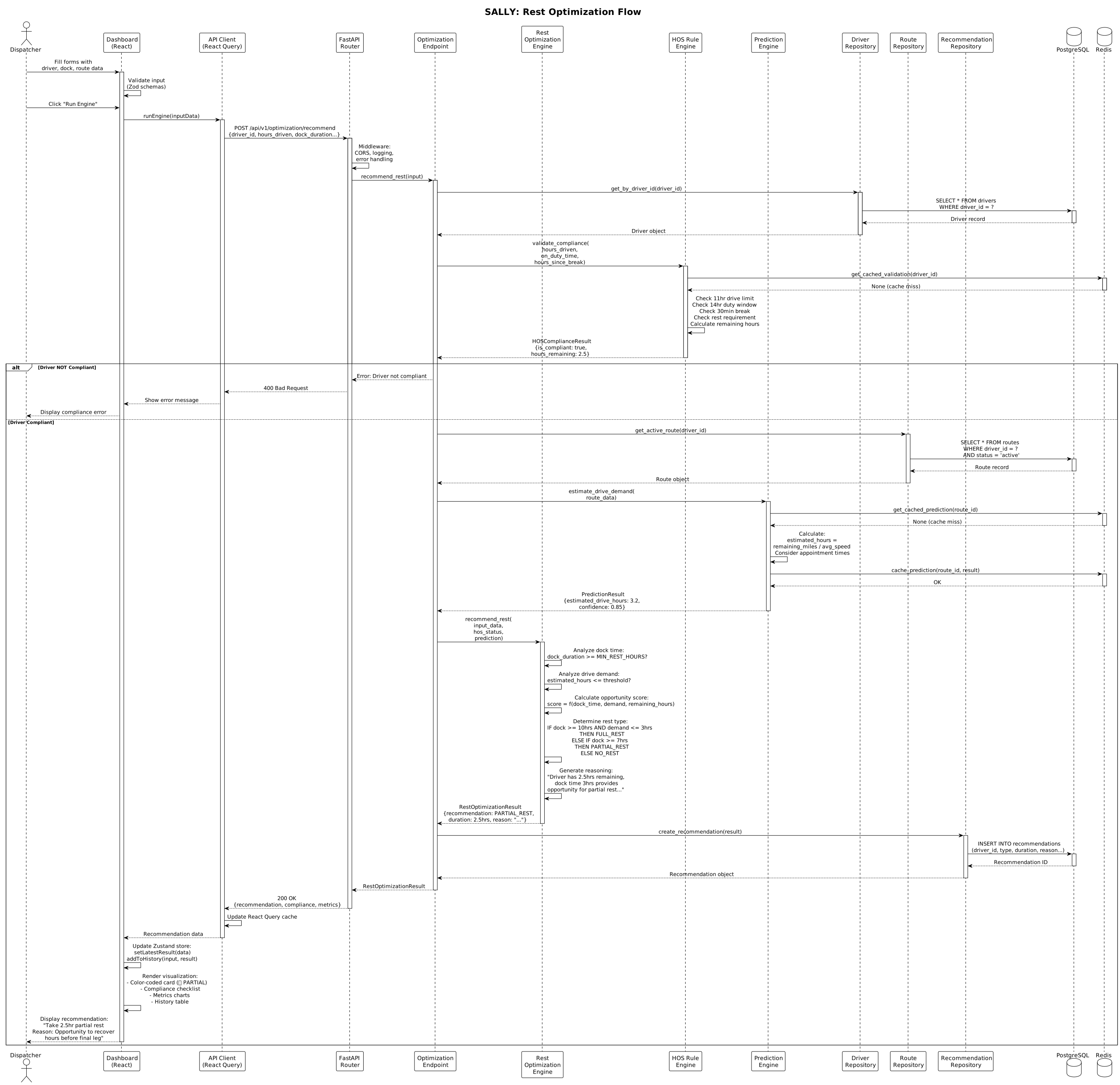
REST Optimization Sequence
Deployment Architecture
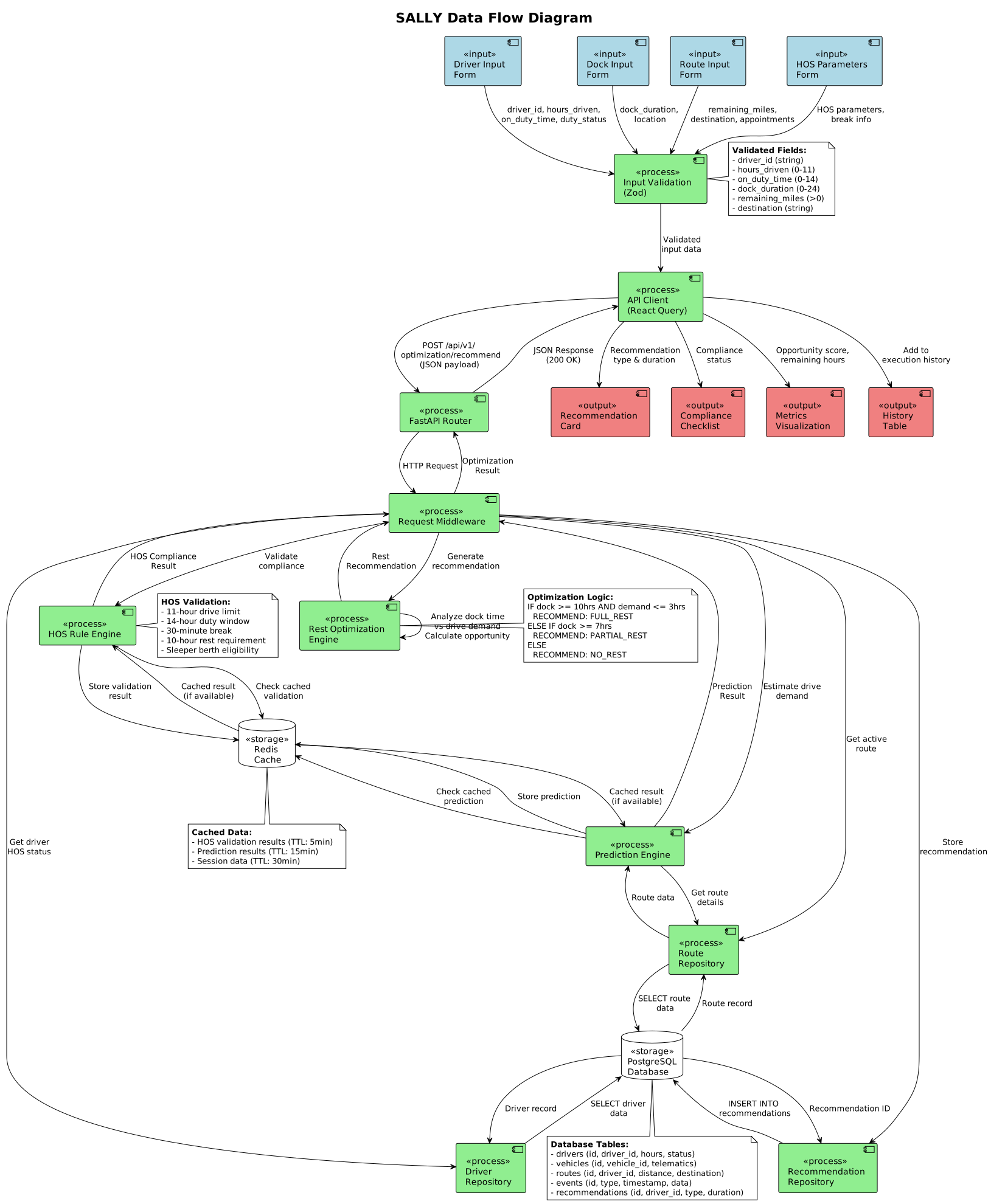
Data Flow
Technology Choices
| Component | Technology | Rationale |
|---|---|---|
| Frontend framework | Next.js 15 (App Router) | Server components for initial load performance, App Router for nested layouts matching dispatcher/driver UX |
| UI components | Shadcn/ui (28 components) + Tailwind CSS | Accessible, themeable primitives with dark mode via CSS variables |
| Client state | Zustand | Lightweight, no boilerplate, works well with React Server Components |
| Server state | React Query (TanStack Query) | Automatic caching, background refetch, optimistic updates for alert acknowledgment |
| Backend framework | NestJS 11 | Module system maps naturally to domain-driven design, built-in guards for auth/tenancy |
| ORM | Prisma 7 | Type-safe queries generated from schema, migration management, PostgreSQL-native features |
| Database | PostgreSQL 16 | JSONB for flexible HOS data, robust indexing for multi-tenant queries, proven at scale |
| Cache | Redis 7 | Sub-millisecond reads for HOS cache, pub/sub for SSE event fan-out |
| Auth | Firebase Auth + JWT | Firebase handles identity (email/password, SSO), backend issues its own JWTs for API authorization |
| Real-time | SSE + WebSocket | SSE for server-push alerts, WebSocket for bidirectional messaging (dispatcher-driver) |
| Monorepo | Turborepo + pnpm workspaces | Shared types between frontend and backend, parallel build pipeline |
| Infrastructure | Docker Compose | Single-command local development, consistent environment across team |
Further Reading
- Backend Architecture — Domain-driven module design, auth flow, request lifecycle, multi-tenancy
- Frontend Architecture — App Router structure, feature modules, state management, theming
- Database Schema — Entity relationships, table groups, multi-tenancy pattern, HOS fields
- Data Flow — Request lifecycles, alert pipelines, integration sync, real-time events